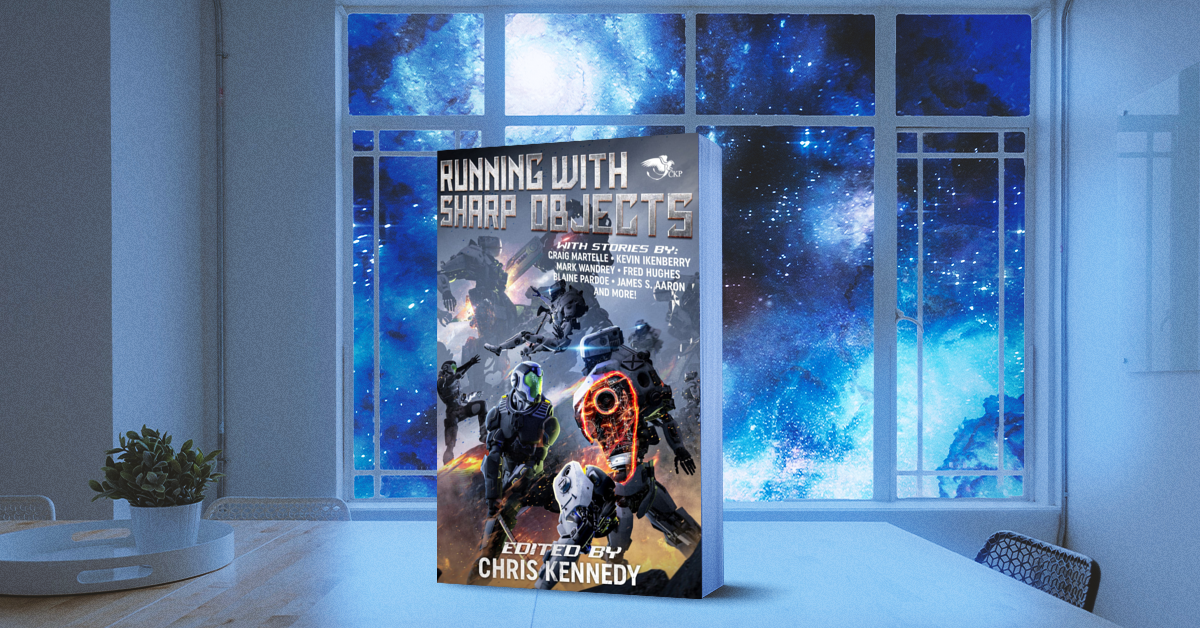
In mid-October, I finished a Military Science Fiction short story called "Blades of a Dying Sun."
While technically MilSF, containing requisite discussions of technology and battles, the story's seed was something I've been pondering for a while: can intelligent life arise in a low-conflict environment? If so, what kind of culture would those aliens develop? Would they ever be interested in interstellar travel? And if they were, how would they react if they happened to run into a more aggressive species?
That's a lot, I know, but it's all wrapped around how humans discuss potential alien intelligences and how those discussions get translated into Science Fiction.
Now, for the purposes of story, it's fun to have aliens who aren't really that much different than us: bipedal, languages and thought processes we can (sort of) understand, and so on. Those are the kinds of aliens John Ringo delivers in his Troy Rising Series, one of my favorite series. Ringo does include some species that are a little more alien, but the main alien species tend toward "human but not."
Ringo goes a little broader in his Looking Glass Series (partially cowritten with Dr. Travis S. Taylor). The Dreen are a demonic, conquest-driven species that take various forms as needed, while another god-like species exists between realities. Still understandable, but a step or two away from most of the aliens in Troy Rising.
There's a real value in populating stories with "human but not" aliens, aside from the fun. Star Trek used interspecies conflicts as fodder for light social commentary, for example. And it's just so intriguing to think that somewhere out there are alien species we can connect with, so why not transform those imaginings into prose? Why not dream the impossible?
As Meg Pechenick said in Ascending, the universe is a lonely place. It's nice to know we're not the only ones living here.
But what if aliens aren't that much like us? What if, as in Solaris by Stanislaw Lem, the aliens we encounter are so different we don't even recognize them as alive, let alone intelligent?
And what if on a planet far, far away, in a corner of the galaxy we may never reach, a species arose in a low-conflict environment and never knew war until attacked by a far more aggressive race?
I'm glossing over whole potentialities here. Entire avenues of discussion, really. Over the past few months, I've dived into what forms scientists think alien life might take (some of them are wild), but that's the core of what I was thinking as I wrote "Blades of a Dying Sun."
This short story's protagonist is Myszan Joseph "Dudeman" Neely, a soldier who "rides" genetically engineered alien dragons via haptic implants. His handler is an alien named Adyni. Adyni's people, the Luminous, are at war with the Khovri, an ultra-aggressive alien species hellbent on dominating the galaxy, when they discover humans. Humans are, naturally, caught in the middle.
"Blades of a Dying Sun" will be published in the anthology Running with Sharp Objects, which will be published by Chris Kennedy Publishing on December 19th. I don't have a list of all the participating authors and their stories, but Craig Martelle, Kevin Ikenberry, Blaine Pardoe, and other well-known MilSF writers have contributed stories.
I'll have more news soon. Until next time, happy reading.

The preorder for Running with Sharp Objects is up here: https://amzn.to/497bGK7